Quick answer
Introduction
At MentionlyAI, we talk with B2B marketing and SEO leaders who already believe AI search matters. The hard part now is proving it. Buyers shortlist vendors in AI assistants, and you need a way to see whether your brand is in that conversation.
What is AI visibility for brands?
AI Visibility Tracking Defined
- Mentions: the AI names your brand in its answer.
- Citations: the AI credits or links to your page as a source.
- Context: the AI describes you accurately and in a good light.
What is AI visibility for brands?
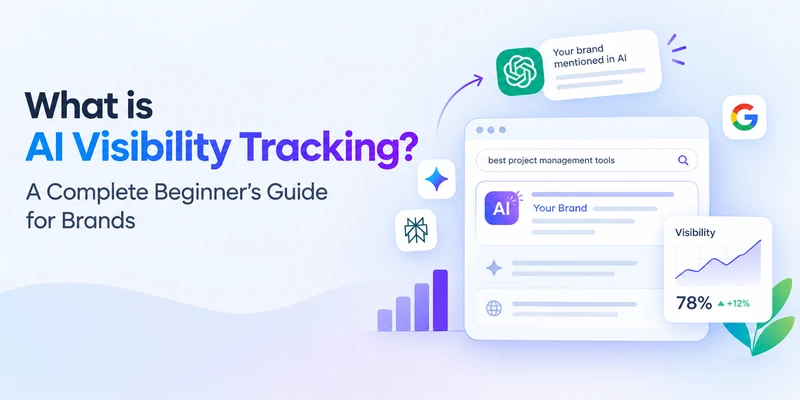
AI visibility is how often, how accurately, and how favorably AI assistants like ChatGPT, Perplexity, and Gemini mention your brand when people ask questions in your category. It covers three things: whether you show up, how the AI describes you, and which sources it credits. Consider this as a mechanism for evaluating credibility and standing, rather than a competitive ranking system. When a buyer asks an assistant for the best vendors in your space, the AI writes one answer. Your brand is either in it or it isn't. That makes brand visibility in AI a different game than you know. You're no longer fighting for position seven on a page of blue links. You're fighting to be named at all.
AI Visibility Tracking Defined
- Mentions: the AI names your brand in its answer.
- Citations: the AI credits or links to your page as a source.
- Context: the AI describes you accurately and in a good light.
How It Differs From Traditional Rank Tracking
| Factor | SEO Visibility | AI Visibility |
|---|---|---|
| What you measure | Ranking position for a keyword | Whether your brand is named in an answer |
| Result format | A list of ten or so links | One written answer, sometimes with sources |
| Consistency | Fairly stable day to day | Can change from one run to the next |
| Main metrics | Rankings, impressions, clicks | Mentions, citations, share of voice |
| What you track | Keywords | Prompts (full buyer questions) |
| Where it happens | One search engine at a time | Many assistants, each with its own answers |
| Click behavior | The click is the goal | A mention can influence buyers with no click |
What Is LLM Visibility? (And Is It the Same Thing?)
What Can AI Visibility Tools Tell You, and What Can't They?
What Trackers Measure Well
- Mention rate: how often your brand appears across a set of prompts. Citation sources: which pages and domains the AI credits.
- Share of voice: your mentions compared with your competitors'.
- Sentiment: whether the AI describes you in a good light.
- Trends: whether you're gaining or slipping across platforms.
What Trackers Cannot See
Some things sit outside any tracker's view. Knowing the gaps keeps your reports honest.
- Private chats: a tracker sees the answers it requests, not the chats your buyers have.
- The why: you see what a model said, not the reasoning behind it.
- Real reach: it can't tell you how many people read a given answer.
- Silent influence: a mention can sway a buyer who never clicks.
- Personal context: a buyer's history and location can change what they see.
Why an AI Visibility Score Is a Sample, Not a Fact
AI answers shift from run to run. So one AI visibility score is a snapshot of a moving target.
Treat it like a poll, not a census. A poll gives you a useful read, never a perfect one.
Here's the rule we call Sample, Not a Fact: never share a score without saying how many prompts and runs sit behind it.
Say a tracker reports your brand in 40% of answers. If that came from five prompts and one run, it's a hunch. From a hundred prompts and ten runs, it's evidence.
Why Does AI Visibility Matter for Your Brand Right Now?
Buyers Are Researching Vendors Inside AI Assistants
Your buyers don't always start with a page of ten blue links anymore. More of them open an AI assistant and ask, "Which platforms help a mid-size team do X?"
The assistant answers with a short list and a few reasons. That list becomes the shortlist.
Call it the Shortlist Window: the moment a buyer asks an AI for options. If you're named, you're in the running. If you're not, you may never learn you lost the deal.
That's where AI brand visibility optimization tools help. They show you where competitors get named instead of you, so you can fix the gap before it shows up in your pipeline.
Fewer Clicks From the Same Searches
Even when people still use Google, the answer often appears before the first link. AI Overviews summarize the topic right on the results page.
People clicked a traditional result link in just 8% of visits when an AI summary appeared, versus 15% when none did, according to Pew Research Center.
Marketers call these zero-click searches. The buyer gets what they need and never visits a site. That puts brand visibility in AI search on the same list as rankings and traffic.
Why an AI Visibility Score Is a Sample, Not a Fact
AI answers shift from run to run. So one AI visibility score is a snapshot of a moving target.
Treat it like a poll, not a census. A poll gives you a useful read, never a perfect one.
Here's the rule we call Sample, Not a Fact: never share a score without saying how many prompts and runs sit behind it.
Say a tracker reports your brand in 40% of answers. If that came from five prompts and one run, it's a hunch. From a hundred prompts and ten runs, it's evidence.
Why a Mention Without a Click Still Reaches the Buyer
A mention puts your name in front of the buyer while they build a shortlist. They may not click, but they remember the name, search for it later, or mention it to a colleague. The influence is real, even when your analytics can't see it.
Here's where that influence tends to show up later:
- Branded searches: more people look up your company by name.
- Direct visits: buyers type your URL after an AI mention.
- Demo form notes: prospects write that they found you through an AI assistant.
What are the key AI visibility metrics?
The key AI visibility metrics are platform breadth, query depth, citation quality, competitive positioning, and temporal consistency. Together they show where you appear, for which questions, with what sources, against which rivals, and how steadily over time. Track all five and you'll know how to measure brand visibility in AI search engines without guessing.
Think of them as the Five-Lens Check. Each lens catches something the others miss, and most AI search visibility tools bundle them into one dashboard.
1. Platform breadth
2. Query depth
3. Citation quality
4. Competitive positioning
5. Temporal consistency
Why Do AI Visibility Numbers Swing So Much?
AI visibility numbers swing because AI assistants write a fresh answer every time. The same prompt can return different brands on different runs. Personalization, location, model updates, and your choice of prompts add even more movement. A single number is a snapshot, so you need repeated runs to see the real pattern.
Four things drive most of the movement. Knowing them keeps you from chasing ghosts in your data.
The Same Prompt Gives Different Answers
AI models pick their words with a little built-in randomness. Ask the same question twice, and you can get two lists with different brands, different orders, and different reasons.
Your brand can show up in the first answer and vanish from the second. Nothing broke. That's just how the engine works.
So brand visibility in AI can look jumpy on a chart. The line wobbles because the answers wobble, not because your content changed overnight.
Why One Daily Run Is Not a Reliable Measurement
One run is one roll of the dice. Check once a day, and a lucky roll can look like a trend.
Flip a coin once a day and three heads in a row feels like a pattern. The coin never changed.
Here's the Multi-Run Rule: repeat every prompt several times per cycle and report the average, never a single pull. Luck evens out, and your AI visibility score starts to mean something.
Personalization and Location Effects
Where a buyer sits and what they asked before can shape the answer. Some assistants use location, chat history, or saved memory.
A buyer in Chicago and a buyer in London may see different vendors for the same question.
Trackers usually run clean, neutral sessions. That keeps results consistent, but it means your numbers show a baseline, not every buyer's view. Track the locations that match your market, and keep them separate.
Model Updates and Prompt Choice
Models get updates often, and a new version can reshuffle which sources it trusts. Mark update dates on your charts so a sudden jump has an explanation.
Prompt wording matters too. "Best CRM for startups" and "top CRM tools for small teams" can name different brands.
Track a mix of phrasings, then keep your prompt set steady so trends compare fairly. Change the set, and you reset your baseline.
How to set up AI brand visibility tracking
You set up AI brand visibility tracking in seven steps: pick a platform, add your domain, choose competitors, select prompts, review your first snapshot, study the gaps, and act on recommendations while you watch growth. The first four steps are quick setup. The last three are where the learning happens.
Here's the full walkthrough. Follow it in order and you'll have a working baseline by the end.
The Same Prompt Gives Different Answers
AI models pick their words with a little built-in randomness. Ask the same question twice, and you can get two lists with different brands, different orders, and different reasons.
Your brand can show up in the first answer and vanish from the second. Nothing broke. That's just how the engine works.
So brand visibility in AI can look jumpy on a chart. The line wobbles because the answers wobble, not because your content changed overnight.
Step 1: Choose your tracking platform
Start with the tool, because everything else depends on it. AI visibility tracking software should cover the assistants your buyers actually use, run each prompt more than once, and show you the sources behind every answer.
Ask a few simple questions before you commit:
- Does it cover ChatGPT, Perplexity, Gemini, and Google AI Overviews?
- Does it repeat prompts, or run each one a single time?
- Can you see which pages get cited, not just whether you were named?
- Does it let you compare competitors side by side?
- Can you export data for your own reports?
Step 2: Sign up and enter your domain
Create your account and add your main domain. That tells the tracker which brand to look for in every answer.
Add your brand name and common variations too, such as a shortened name or a product name. Assistants don't always write your name the way you do, and a missed spelling can hide a real mention.
If you run more than one product or region, set up each as its own project. Mixed data makes trends harder to read.
Step 3: Select competitors or choose your own competitor
What is AI brand visibility competitive analysis? It's the practice of comparing how often AI assistants name you versus your rivals for the same prompts, and which sources they credit for each.
Most platforms suggest competitors for you based on your domain. Review the list and keep the ones your buyers actually compare you with. Add any tools.
Mix your competitor set on purpose:
- Direct rivals: the vendors that show up in your deals.
- Category leaders: the big names that dominate AI answers.
- Rising challengers: newer brands that keep appearing in recommendations.
Step 4: Choose prompts to track
Prompts are the questions your buyers ask. Pick them like a buyer would, not like a marketer.
Cover the whole journey with a few types:
- Category questions: "What are the best tools for [your category]?"
- Comparison questions: "[Your brand] vs. [competitor]"
- Use-case questions: "Best platform for [specific job or team size]"
- Problem questions: "How do I fix [pain point your product solves]?"
Write each one in plain, natural language. Add a few phrasings of the same idea, since wording changes answers. Then lock the set, so your trends stay comparable.
Step 5: View your initial snapshot
Give the tracker time to run your prompts a few times. Then open your first snapshot.
Don't judge it yet. Treat it as your baseline, the starting line you'll measure growth against. Look for:
- Your overall mention rate across platforms
- Which assistants name you and which ignore you
- Your share of voice next to each competitor
- The pages and domains that get cited
A low first number isn't a failure. It's honest information, and honest information is the whole point.
Step 6: Analyze gaps and opportunities
Now the useful part. Look for places where competitors get named and you don't. Those are your gaps.
Sort what you find into three buckets:
- Missing entirely: prompts where you never appear. Check if you have content that answers them.
- Mentioned, not cited: the AI knows your name but credits other sources. Your pages may need clearer answers.
- Described wrong: the AI gets your product, pricing, or audience wrong. Fix the sources it relies on.
Check the cited sources for each gap. If a competitor wins because of one review site or one comparison article, you've just found a target.
Step 7: Act on recommendations and track growth
Turn each gap into a task. Publish a page that answers the missing prompt. Add a clear comparison to your site. Update facts the AI gets wrong. Earn mentions on the sources AI engines already trust.
Then wait, and measure again. Brand visibility in AI search tends to move slowly, so judge progress on trend lines instead of one good run.
Set a simple rhythm:
- Weekly: glance at your mention rate and any big swings.
- Monthly: review gaps, ship fixes, and compare to your baseline.
- Quarterly: refresh your prompt set and competitor list.
Check the cited sources for each gap. If a competitor wins because of one review site or one comparison article, you've just found a target.
What Should You Do With Your AI Visibility Data?
Act on patterns that hold across several runs, platforms, and weeks, and ignore single-day swings. Use your data to find missing prompts, weak citations, and wrong descriptions, then fix those with new content and better sources. AI brand visibility optimization tools make that easier by pointing you to the exact gaps worth closing first.
Data only helps when it changes what you do next. Here's how to sort the useful from the noisy.
Signals Worth Acting On
- Steady gaps: a prompt where competitors win run after run, for weeks.
- Wrong facts: the AI states the wrong pricing, features, or audience for your brand.
- Citation shifts: a source that used to credit you now credits a rival.
- Platform splits: you do well in one assistant and vanish in another.
- Sustained drops: your mention rate slides across several weeks, not one run.
Noise You Can Safely Ignore
Other movements look dramatic and mean very little.
- One-day spikes or dips: a single run is one roll of the dice.
- Small percentage wiggles: a two or three point move rarely means anything.
- Order changes: being named third instead of second in a list.
- Wording differences: the AI describes you with different adjectives each run.
Why Fixed Benchmarks (Like a 20-30% Citation Rate) Don't Hold Up
You may hear that a healthy brand should earn a 20-30% citation rate. Treat that kind of number with care.
The right citation rate changes with your category, your prompt set, and your competitors. Brand visibility in AI looks different for a niche B2B tool than for a household name. Both can be winning at very different numbers.
Your own baseline beats any universal target. Call it the Own-Baseline Test: a number only counts if you can compare it to your own past or a rival in your set. Set goals as gains over your starting point and as gaps closed against named rivals.
Conclusion
AI visibility tracking isn't about chasing a perfect score. It's about knowing whether buyers hear your name when they ask an assistant for help, and what they hear next. The right AI visibility tools give you a steady baseline, show you where rivals win, and keep you honest about what a single run can and can't prove.
Start small. Pick your prompts, name your competitors, and let the data build for a few weeks. Then fix the gaps one at a time, and let AI brand visibility optimization tools tell you which fix should come first. Add one question to your demo form too, so buyers can tell you how they found you.
You now know how to measure brand visibility in AI search engines without guessing: sample often, compare against your own baseline, and tie the results to pipeline. Ready to see where your brand stands? Book a call with MentionlyAI, or compare how our platform covers assistants, repeats prompts, and reports on citations next to the other options on your shortlist.
You ask ChatGPT to name the best vendors in your category. Your brand isn’t on the list, but two competitors are. Ouch. That sting is exactly why AI visibility tools exist, and why B2B marketers are now asking how to track it.